
Why do I love big organization HQ tours in Service Design education?
In short: access many nerds in one go who are in the thick of it with different professional postures. And it can lead to projects for learners.

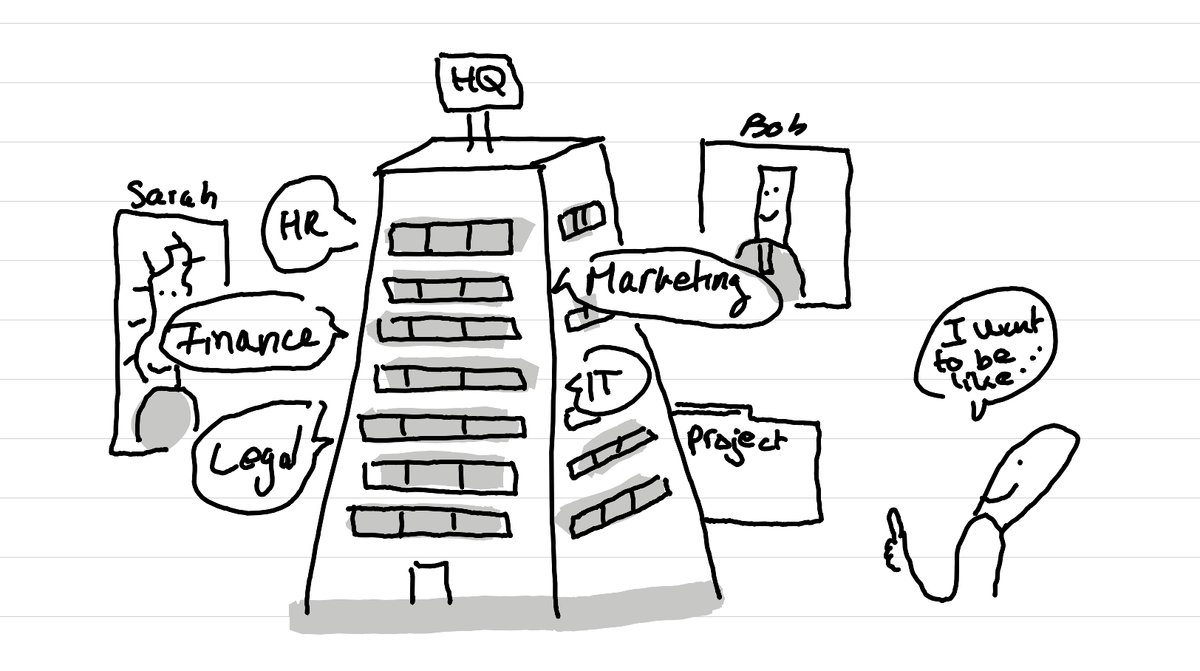
Here are a few reasons why I like to do tours of large organizations with Service Design learners:
Access many types of people in one location
An HQ is the place where you often get to meet people working in many different departments all without having to change location. On one floor you might meet HR people. On another marketing people. On another finance people. The beauty is that all these people serve the same organization. And when you ask them all the same question you realize how much each practice is both different and very similar.
Speak with people in the thick of it
For some topics you can't do much practice exercises with learners. For example when it comes to Organizational transformation you can get into "practice mode" in a more real way by speaking with people who experience it everyday.
See different professional postures
In such a tour you don't only see different practices but also different postures. The very driven, the very reflective, the lobbiysts, etc. Learners get to see which posture, or mix of postures they would like to have.. "Would I like to be like Bob or like Sarah?"" is a question they ask themselves naturally. It shows them how they could be in the future.
It connects learners with potential projects
Learners get to connect with interesting contexts they could use for their project. For example a learner doing a project on employee wellbeing might connect with the HR team.
This article was written and illustrated by hand on a refurbished Remarkable II tablet. The handwritten text was converted to typed text with the Connect Service by Remarkable. If you are curious you can download the original note below.
Related articles
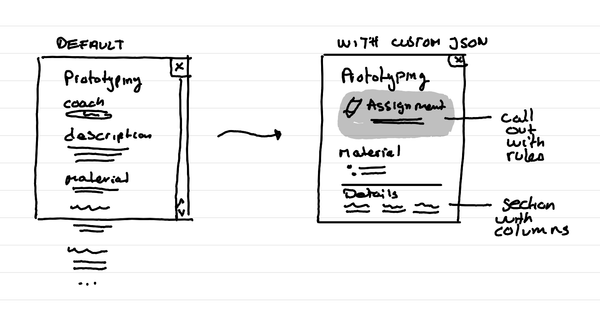
How to format Microsoft Lists for a course schedule so that it doesn't suck?
In short: with custom JSON code, that you can ask an LLM to help you write, you can adapt how the details of a session in your course look like.
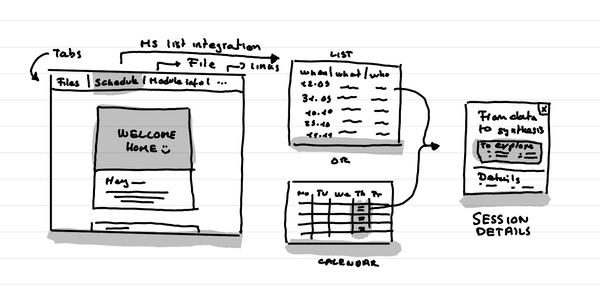
How to create a small course hub in a teams channel
In short: Use tabs to link to key documents, and resources. Use Microsoft List as an integration to put the schedule that shows as a list or a calendar.
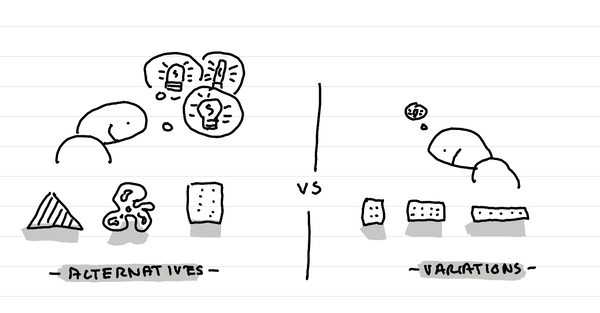
Why I go for alternatives instead of variations when making and testing protoypes
In short: alternatives that are opposing make you learn more than small tweaks.