What is a formula to help you write a written thesis that stays practical?
In short: start with what and share why the answer to the question will help you.

Context
In the Master Service Design of the HSLU learners first do a written research thesis and then do their design project. This written research thesis is the opportunity to create a strong basis for their project with theories, state of the art, expert interviews, observations, etc.
A good question helps
One thing that helps frame such a research thesis is having a research question.
The problem is that for some people these questions are very abstract and end up creating more confusion than help.
Here's a tiny formula that could help avoid this:
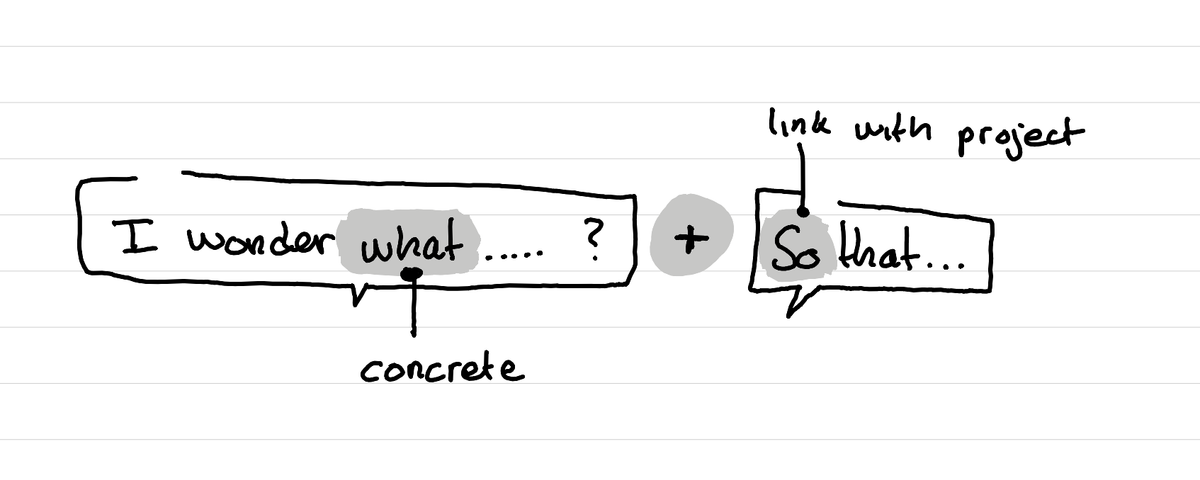
" I wonder:
What... [question here]?
So that.... [goal]. "
The two main changes are:
- Start with what: "what" forces you to be concrete (what are the different models.... What are the drivers and blockers...., etc.)
- Link it with the project: you are researching so that it helps you. Adding this link helps you see it the answers to your question really will help you.
This is for practical research
My push here is not for one perfect formula. This one can help if you want to write a thesis that has a strong practical focus. If you are doing something more explorative or even philosophical, that's for sure not a formula I would use as a basis.
This article was written and illustrated by hand on a refurbished Remarkable II tablet. The handwritten text was converted to typed text with the Connect Service by Remarkable. If you are curious you can download the original note below.
Related articles
How to format Microsoft Lists for a course schedule so that it doesn't suck?
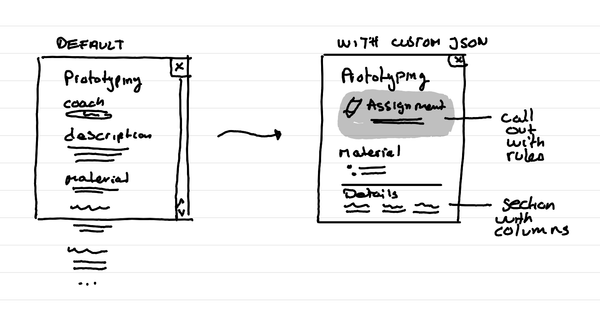
In short: with custom JSON code, that you can ask an LLM to help you write, you can adapt how the details of a session in your course look like.
How to create a small course hub in a teams channel
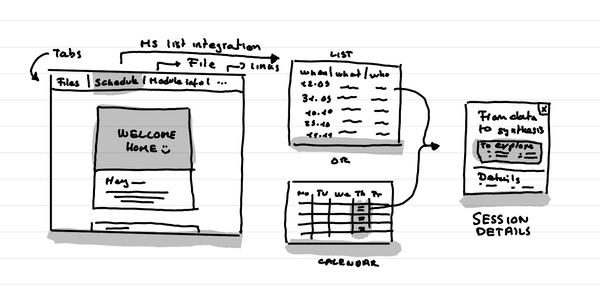
In short: Use tabs to link to key documents, and resources. Use Microsoft List as an integration to put the schedule that shows as a list or a calendar.
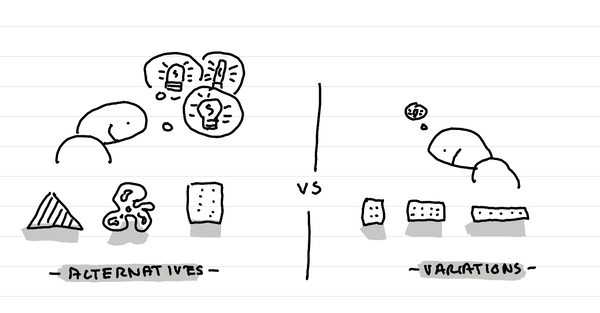
Why I go for alternatives instead of variations when making and testing protoypes
In short: alternatives that are opposing make you learn more than small tweaks.