
How to engage students in the co-creation of courses
In short: get their feedback before, during and after the course. Get students to shape the course by organizing parts of it.

I'm applying the same mindset I use in my Service Design work to my teaching work. Therefore, I'm experimenting with ways not just to provide a course but to let students shape the experience.
Here are a few of the ways to do that:
Getting feedback before, during and after the course
- Interviews before the course: when possible, I like to interview a few students before the course. During such interviews, I share the service blueprint or structure of the course and ask them for feedback.
- One-to-one break talks during the course: once the course has started, I usually use the break time to check in with a student to see how she feels. This helps me also to ask questions about my personal sensations I have about the energy level of the class, the speed, etc.
- End of course feedback: at the end of the course, I ask the students to let me know what things they would love to keep, change and remove.
All of these feedback pieces help me to continuously adapt the course based on what I've learned.
Getting students to shape the course
- Students learn by teaching: as the course facilitator I bring the material and shape the course, but it's the students that teach it.
- Give challenges to students: for example, in a course, I've asked a student who is great at organising parties: "For the next session, could you imagine ways to give a bit of a party flavor to the course?"
Related articles
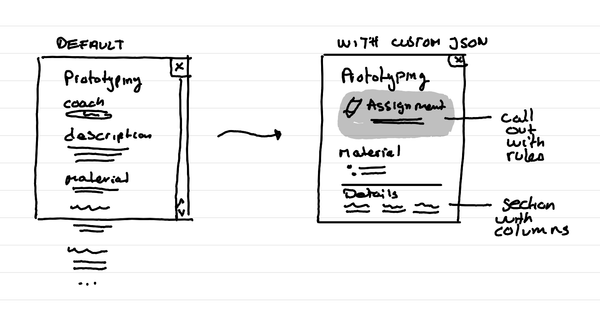
How to format Microsoft Lists for a course schedule so that it doesn't suck?
In short: with custom JSON code, that you can ask an LLM to help you write, you can adapt how the details of a session in your course look like.
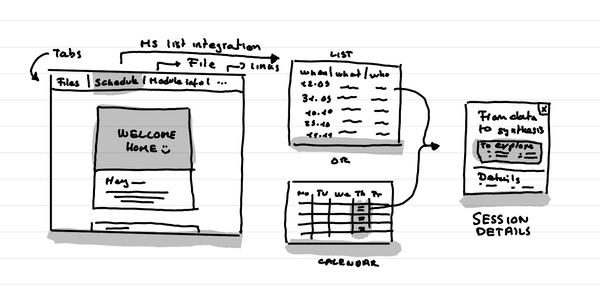
How to create a small course hub in a teams channel
In short: Use tabs to link to key documents, and resources. Use Microsoft List as an integration to put the schedule that shows as a list or a calendar.
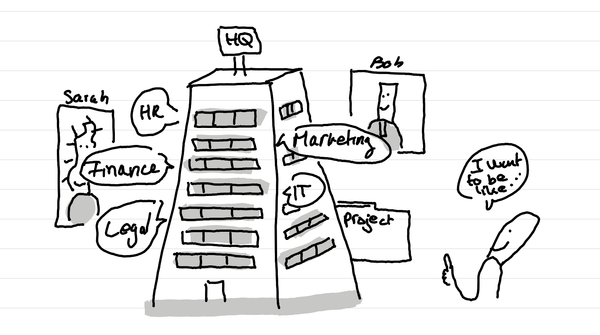
Why do I love big organization HQ tours in Service Design education?
In short: access many nerds in one go who are in the thick of it with different professional postures. And it can lead to projects for learners.