
How can you learn about students creatively?
Use the stranger portfolio technique.

The steps of the stranger portfolio
- Build: Make students build a stranger portfolio made of work they wish they would have produced.
- Present: Make the students present the portfolio and explain why the work pieces resonate with them
- Group reflection: Make the group reflect about what they learned about their colleagues.
How I discovered this technique
Getting to know the students you’re working with is important if you want to support them individually in growing based on what they already know and where they want to go.
As part of a course on advanced prototyping at the Master Design of the HSLU, Lucerne University of Applied Sciences and Arts, I co-lead with Gordan Savičić, we are using an exercise called the stranger portfolio. It’s an exercise I didn’t know before Gordan told me about it.
How to do to it
1. Individual work: collect great work
The exercise involves asking the learners to prepare a portfolio of other people’s work. It should be work that they would be proud to have created themselves.
What’s important here is to make clear that the learners understand that they can include any type of work. It can be related to what they want to achieve in the world, what they love, etc.
2. Presentation in group
Then, in a group session, each person presented her stranger’s portfolio by revealing why they would be proud to have created each piece of work.
3. Group reflections
The rest of the group then asks questions or shares reflections about the qualities they see in the work or what they feel it taught them about the person.
Why I find the Stranger Portfolio so good
As I ran for the first time a stranger portfolio, review it really revealed a lot about the students that I didn’t know:
- It showed what are their aspirations
- It showed how they perceive the world.
What was particularly striking to me was that I felt I knew quite well a few of the students, but seeing their Stranger Portfolio revealed a part that I wasn’t aware of at all.
For example, one of the learners only included art pieces in her stranger portfolio, which to me felt like a clear statement about what type of work she really wants to produce: not problem-solving Service Design pieces but rather art pieces that make you reflect or just create a sense of joy.
Related articles
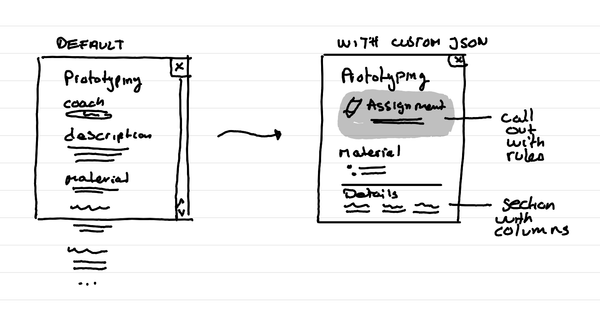
How to format Microsoft Lists for a course schedule so that it doesn't suck?
In short: with custom JSON code, that you can ask an LLM to help you write, you can adapt how the details of a session in your course look like.
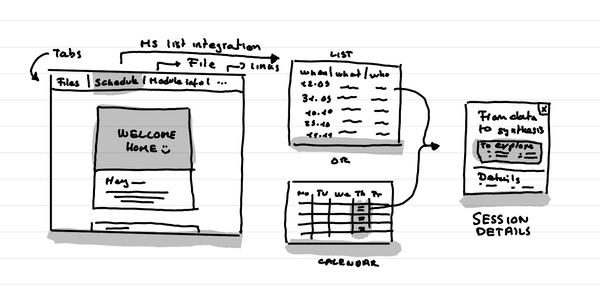
How to create a small course hub in a teams channel
In short: Use tabs to link to key documents, and resources. Use Microsoft List as an integration to put the schedule that shows as a list or a calendar.
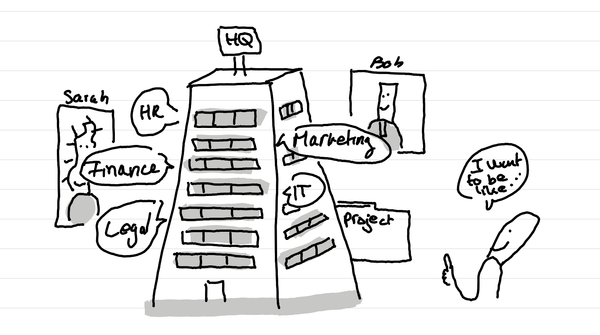
Why do I love big organization HQ tours in Service Design education?
In short: access many nerds in one go who are in the thick of it with different professional postures. And it can lead to projects for learners.