
What are simple hacks to make an exhibition of Service Design work look stronger?
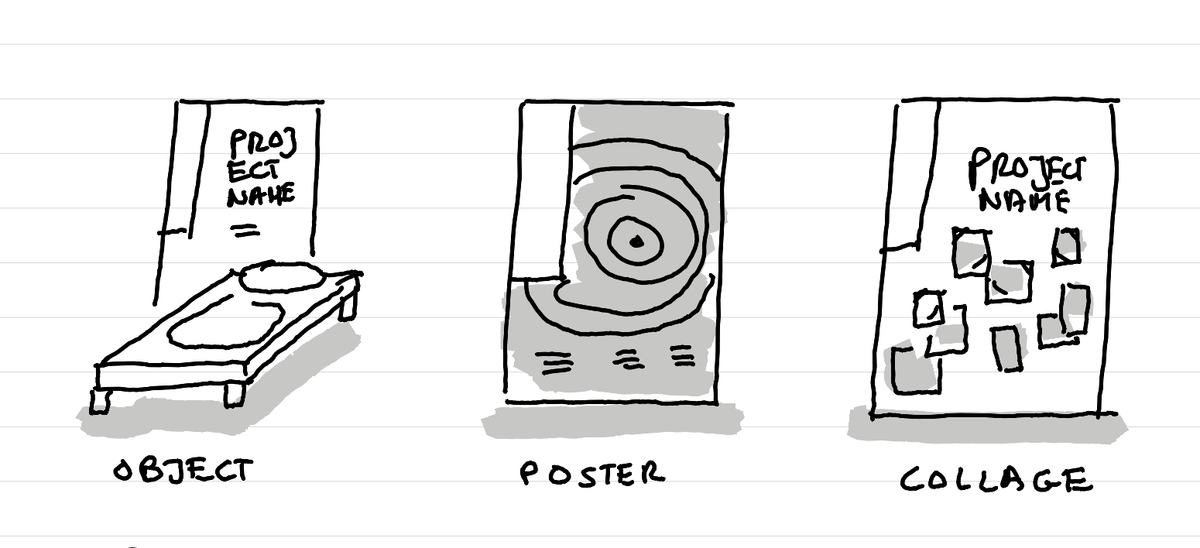
In short: Add an object that shouldn't be here, that is big and that tells a story about your project (like a bed), print a huge poster that takes the whole exhibition wall, make a collage of small printed elements showing many results of your process.

Context
Within the Master of Service Design of the HSLU, learners have to display their final project within an exhibition.
I'm definitely not a spatial designer, so each year I observe what learners from this master and others do and try to pick a few inspiration to share for the next cohort.
A few smart tricks
Here are a few smart tricks to create an exhibition that looks great while not overcomplicating it.
Add an object that shouldn't be here
A learner had a children bed for example. Add an object that is big, that you can easily buy at IKEA or at a second hand shop and use it to contextualize your project. You can even glue that object to your exhibition wall if you want to get extra fancy.
Make your wall one big poster
Instead of painting, adding objects or stickers, "just" create a poster of the size of your wall and stick that poster there.
Make a collage
Print a lot of tiny things and make a collage of your process and interesting pieces of your work. This could be for example touchpoint prototypes, photos of your interviews, quotes from your research, etc.
This article was written on a refurbished Remarkable II tablet with a type folio cover. The illustration was made drawn by hand on the same tablet.
Related articles
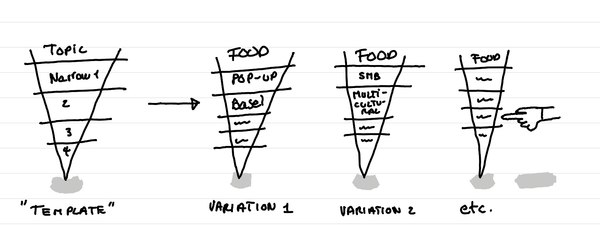
How to use a thesis topic funnel to find the right flight level for your thesis?
In short: make different empty sketches of a funnel with a large top that then becomes a triangle with the narrow part down and divided in sections. At the topic comes your topic idea. Then add elements that make it more specific.
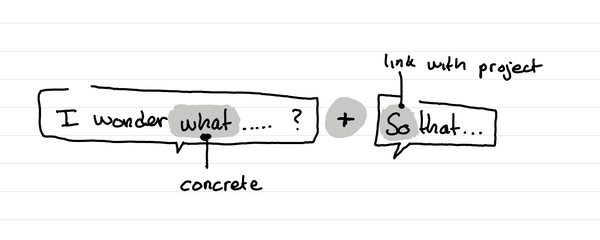
What is a formula to help you write a written thesis that stays practical?
In short: start with what and share why the answer to the question will help you.
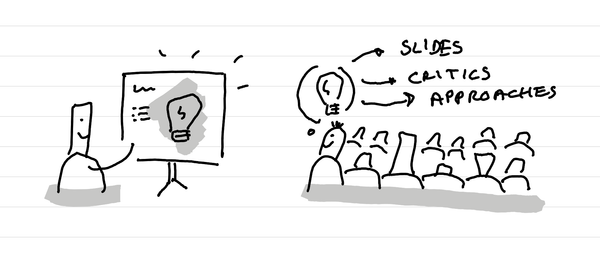
Why joining presentations of peers is a secret weapon?
In short: joining presentations of other students gives you a lot of ideas on how to sell, contextualize your project bettern that you can steal and adapt to your next presentation.