
Why I've stopped looking at the number of people registered for events?
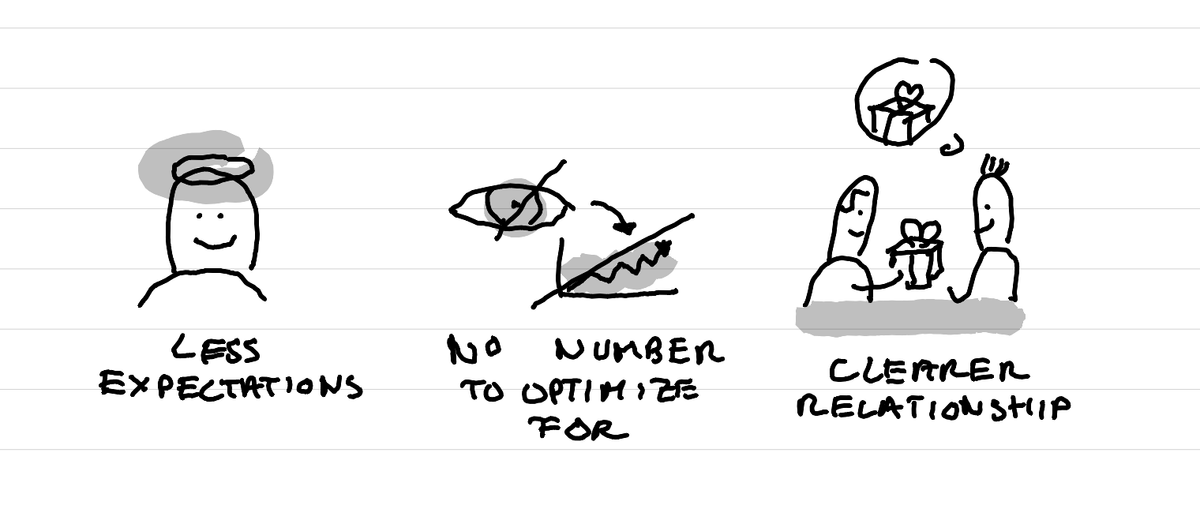
In short: it creates less expectations, it takes out a number that I can fight to optimize for, it makes clearer in the relationship that this is not a lead magnet and naturally selects participants who are really motivated.

In the last months I've changed how I deal with the events I organized. I basically changed two things: I've stopped looking at the number of people who register when there is a signup form, and I stopped having signup forms when possible. Because I don't need that data, and it made me grumpy to see how many people register but don't come.
I've been organizing my fair share of webinars. And one thing that is always a bit of an emotional ride is seeing how many people are registered, and then seeing that only a few of those really then show up. You have 200 people signed up and then have 30 people in the room.
That's something that started to frustrate me. And so I just stopped to look at these numbers. If there is one person joining or 300 it basically doesn't change how I show up, and what I'll do in this event. So knowing a number that then will create frustration doesn't help me at all.
That was the first step. Stoping to look at these numbers.
Then I went much further with the new version of this website on Ghost.
Ghost, compared to Podia, doesn't have really an event system. And from time to time, I still like to create an event of my own, be it a webinar, or a workshop. As I've decided to really go all in with Ghost, I had to choose:
Do I add for events an external form, like a lu.ma event page, or a Notion Form. Or do I just give the calendar invite and Zoom link and don't even ask people to register. I went with this second option.
Now, even if I wanted, I don't know if there is any one who will show up for events.
And in a way that has a few side effects I like:
- Shows it's really free: It makes it much clearer that this is really a pro-bono thing, it's not a lead magnet, I'm not trying to get people trapped in my newsletter. No I'm genuinly making this event because I find it fun and as a service for others. So it makes the relationship clearer. And if someone asks how they can know when the next event is, then the newsletter can help them with that. But it's not automatic.
- Positive effort for participants: It puts the responsability for remembering to the participant. Not having a registration system means, I can't send an automatic reminder to people. And that is a sort of natural filtering system. You only get in the event people who did the extra effort to add it to their calendar and make sure they don't forget it.
- It's less expectations: I don't know who comes, so I have less expectations.
- I can't optimize for a number: As I don't have a number to track, I'm less interested to game my own system to move that number ahead. Often people say negatively, you can't optimize what you don't track. But on the other side, you are not bothered by what you don't track.
So for this new season of this website and my life, I'm less in the idea of growing the number of people I'm talking too.
There is already way too many people in my newsletter list for me to handle properly. But that's a thought that I'll share more about maybe in another post.
This article was written on a refurbished Remarkable II tablet with a type folio cover. The illustration was made drawn by hand on the same tablet.
Related articles
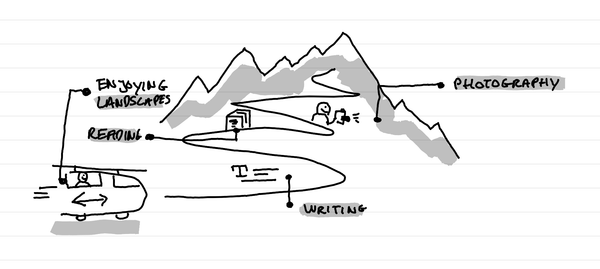
Why I love tiny one day retreats with train and alps?
In short: it's a great time to write, read, enjoy landscapes and come back to a photography practice. It's a time of calm solo presence that recharges batteries.
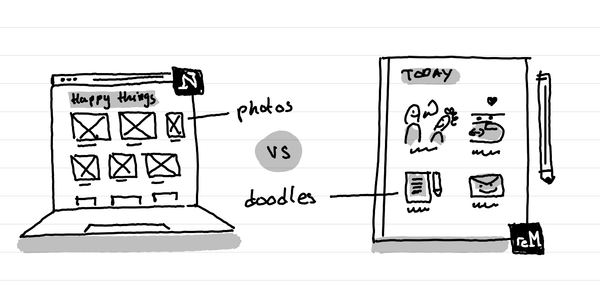
How I kept my gratitude journal visual when moving from Notion to Remarkable?
The short answer: instead of having photos and screenshots, I now have little doodles as a visual summary of my day.
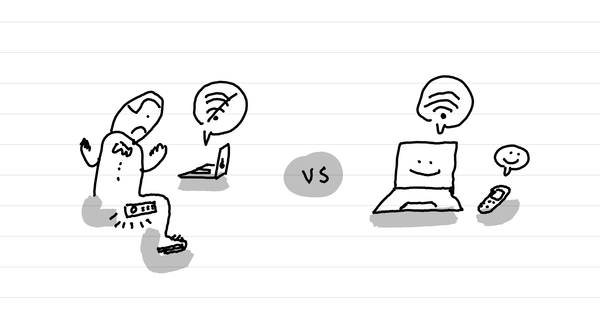
How to not get your Punkt MP02 to overheat and shut down when in internet sharing mode
The short answer: don't leave it in your pocket.