Why you should ask a peer to give you back your thesis idea as a brief
In short: ask a friend, a peer or an AI tool to listen to you while you tell everything you know about the topic you want to explore in your master thesis and ask that friend or tool to give it back to you as one or several clear briefs.

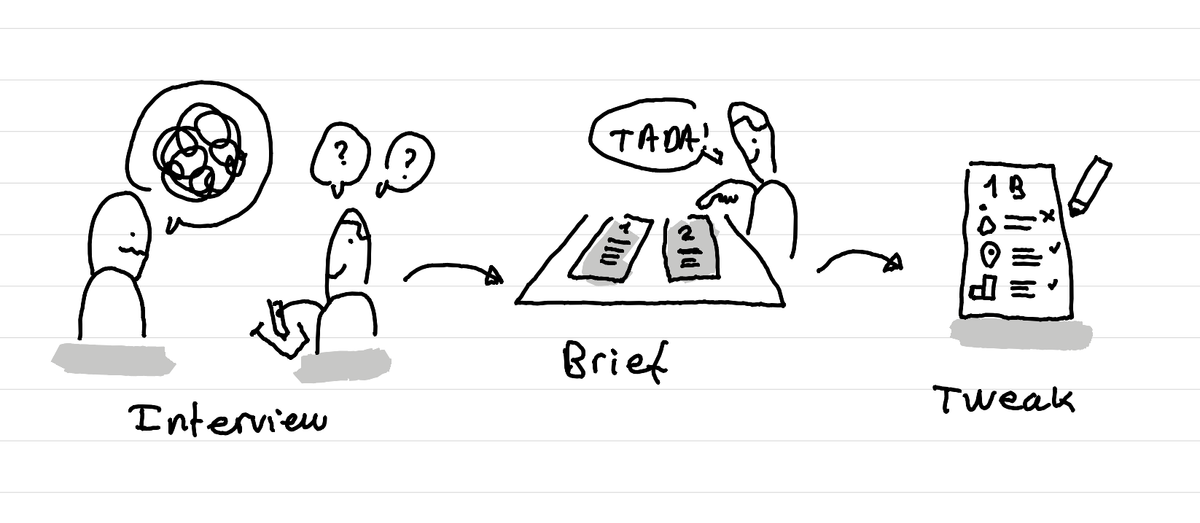
Often we have already everything that we need when it comes to finding and framing our master thesis, but it feels very fuzy to us. In such moments a recommendation that I like a lot is to not clarify your fuziness yourself but to ask someone else to listen to you and reformulate it in a clear brief.
Such a brief could include things like:
- What's the main question you are exploring
- Who are the target groups, people to involve
- What are the partners, services where this could live
- Where it's gonna happen
- Why this is an important topic to you
If your rambling goes in many directions, then your colleague, friend or even AI tool, can simply give you multiple briefs back saying: these are all the topics I've seen in what you shared.
It's like writing a book. The first draft is very hard to write for many, but editing is much easier. Here we outsource the creation of the draft, then you can pick the brief that fills the strongest and tweak it further.
Related articles
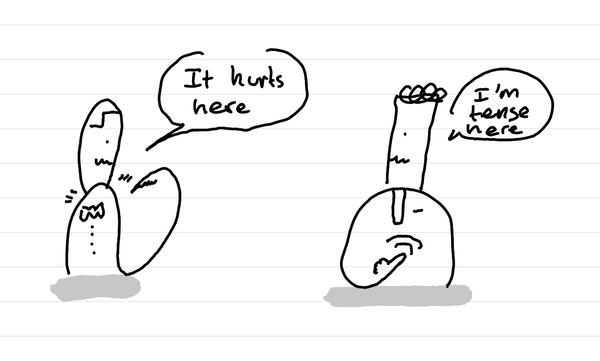
Why do I share my physical sensations in difficult workshop settings?
In short: I might say: "Oh I feel a tension in my shoulders right here. How is it for you?" when things get intense. This then shows by example that people can open up about how they personally feel, and help them share emotions they haven't fully processed yet by talking about physical sensations.
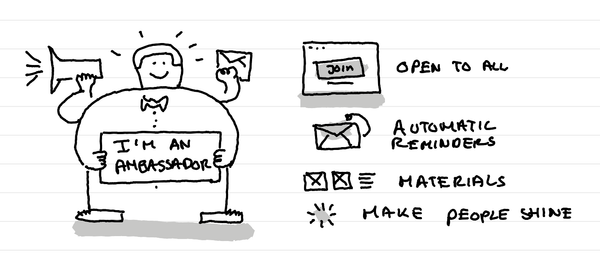
What is a great way to involve the community?
In short: make people ambassadors, give them material to share, and send reminders to do so.
How to format Microsoft Lists for a course schedule so that it doesn't suck?
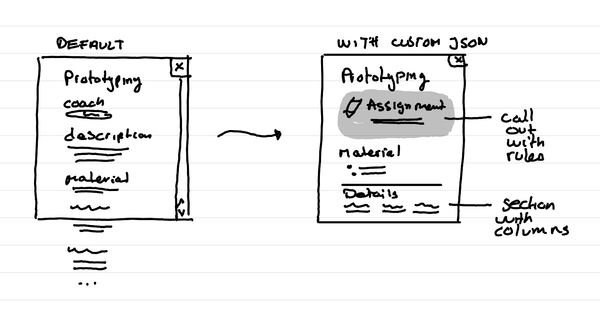
In short: with custom JSON code, that you can ask an LLM to help you write, you can adapt how the details of a session in your course look like.