
What are traps when bringing Service Design practices in coaching?
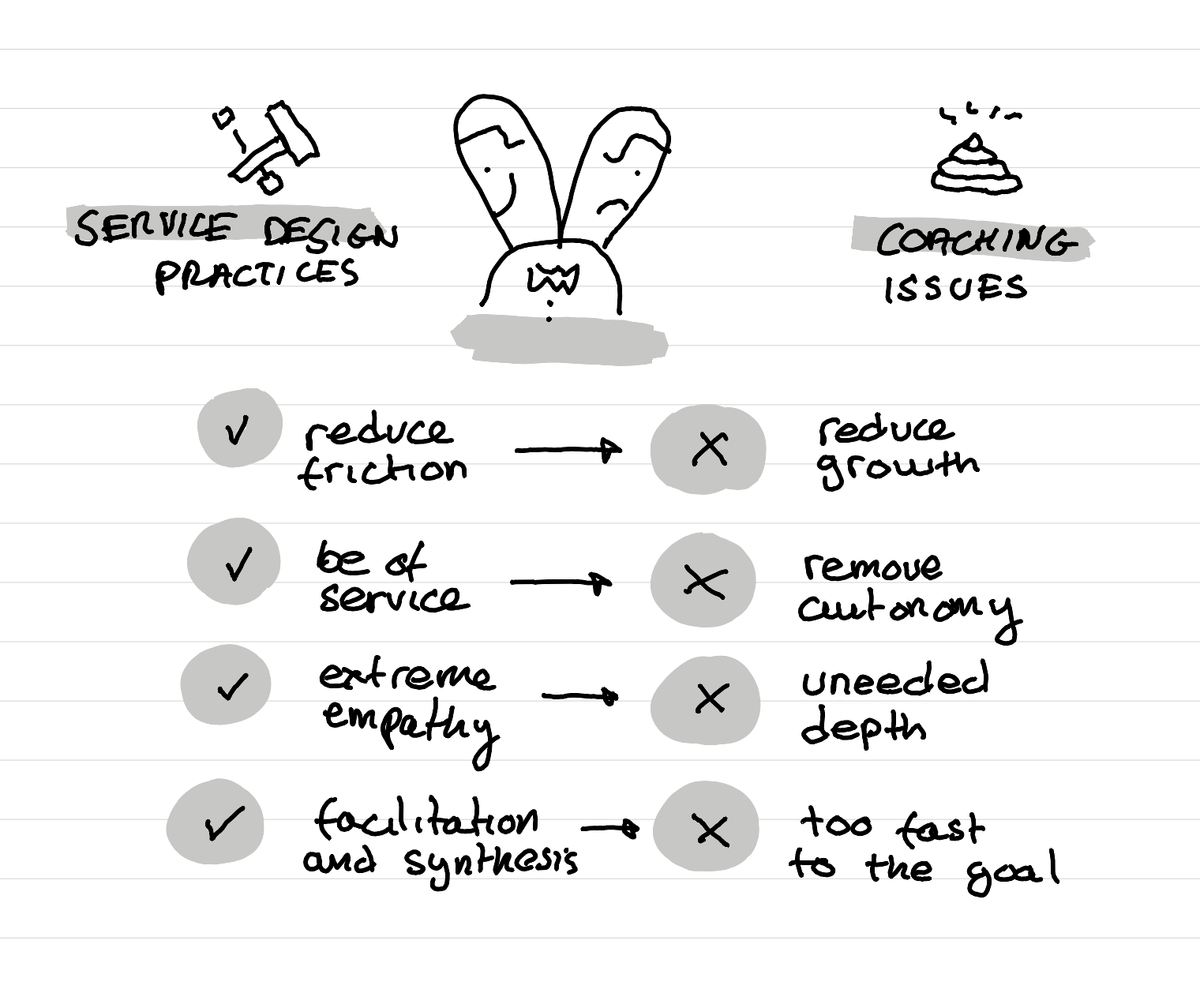
In short: there are key Service Design practices that when transferred to coaching can create issues. Like: reducing friction, a serving attitude, deep empathy or strong facilitation and synthesis can all lead to reduced growth, effort or autonomy.

Context
Lately I've changed a lot my coaching approach especially inspired by the idiolectical approach. In short I go even stronger in the "just asking questions" mode without synthesis or reframing.
Great skills which become problematic
As a Service Design professional there are a lot of skills that are very transferrable into coaching:
- asking open questions
- helping people open the word of possibilities
- time management in conversations
- etc.
But there are also skills which can be "false friends". These are great in a Service Design practice but can become problematic in coaching:
Reducing friction leads to a lack of growth
A lot of the work in Service Design is to create a smooth and lovely experience for the people they serve. Bout in coaching friction is important. It's important that the coachee does the reflection, formulates ideas. If it's too easy then there wasn't an effort that helped the person grow. I t's a bit as it a fitness trainer would carry the weights for the client to smoothen the experience.
Being of service removes autonomy
As a Service Design practitioner there is often an attitude of wanting to serve others, yeah, it's in the name after all. Brut being of service can reduce the autonomy of the coachee. Taking visual notes to keep track of the session and offering those removes effort and autonomy.
Extreme empathy leads to necessary depth
Service Design professionals are used to explore the deep motivations behind actions, they explore the cultures, the thinking styles, etc. But in coaching the coachee is in the driver seat. The goal is for them to make sense of what they do, not for the coach to understand them. So for me, I have to retrain my intellectual curiosity. I'm not here to map the person inner thoughts. I'm here to ask questions that help them move their practice forward.
Facilitation leads to people getting too fast to the goal
Many Service Design nerds are also workshop facilitators. There it's often your job to do synthesis on the spot, offer a reframe in order to move the team faster to the goal. People hire you for that. In coaching it you do the synthesis, you offer the reframes, you are in a way offering a cheat code that steals from people the opportunity to do it for themselves.
Backstage of this article
This article was written and illustrated by hand on a refurbished Remarkable II tablet. The handwritten text was converted to typed text with the Connect Service by Remarkable. If you are curious you can download the original note below.
Related articles
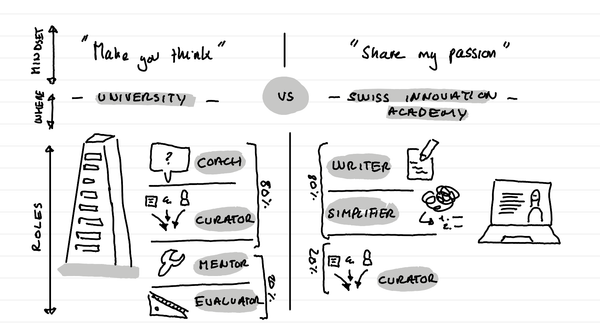
How do I see my role as a Service Design educator?
In short: my role is different in a university context versus in what I do on the Swiss innovation Academy. In a university I'm a coach. On this website I'm an author who shares his passion and simplifies it for the masses.
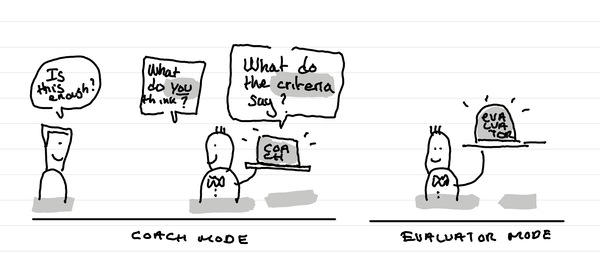
How I react to the question "is this enough?"
In short: make them answer the question themselves, make them go through the grading criteria and only then fill the gaps with the evaluator hat.
What are tips to become a senior service designer?
In short: mentor others, teach others, try out new technics.