
How to adapt class workshops to different speeds and needs?
In short: we can split a class in two: one group does the activities guided and one unguided. Both get first an overview of the end goal. The guided groups then gets step by step guidance.

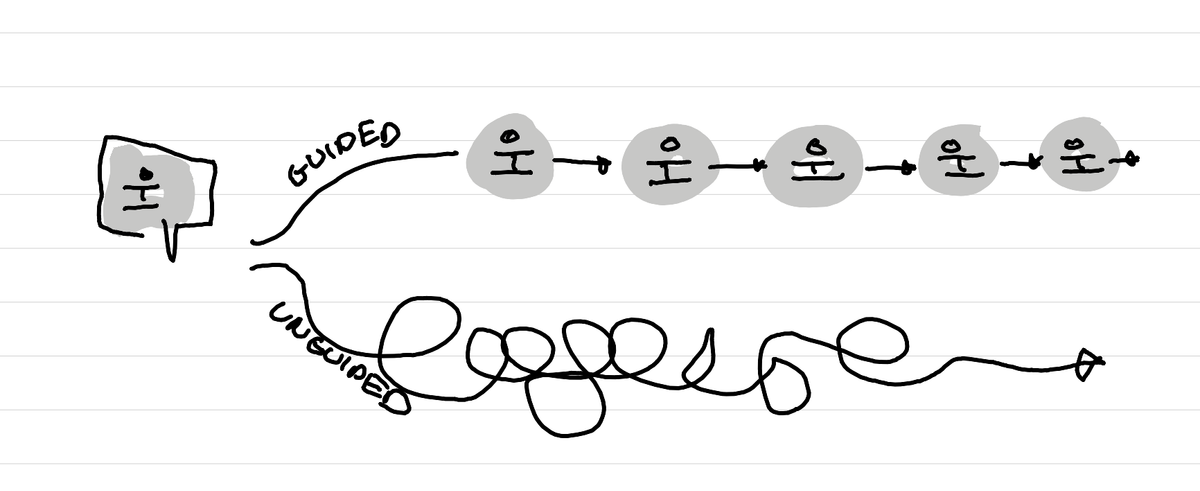
Context
In some of the courses I give, I like to run the class more in workshop mode. Where a challenge or task is given, an amount of time, and people work on it. Like with the workshops institutions pay me to run, I like running them in a step by step way with some positive time pressure. People just have to focus on the one challenge they have right now.
This usually enables deep work, and enables people who are new to a way of working to get pretty far in a short amount of time.
I often like to use this same format in my classes. Yet in the last months I have given to learners more stuff to read in advance, that teaches the specific skills that we'll then use in workshop mode during the class (similar to what the nerds call the flipped class room model).
Here something interesting happens.
Those who feel confident after the reading of the material they did at home, can do the workshop activities without much guidance. For example by justing knowing the end goal. But others might still need and or prefer the step by step workshop mode.
Two groups working in parallel
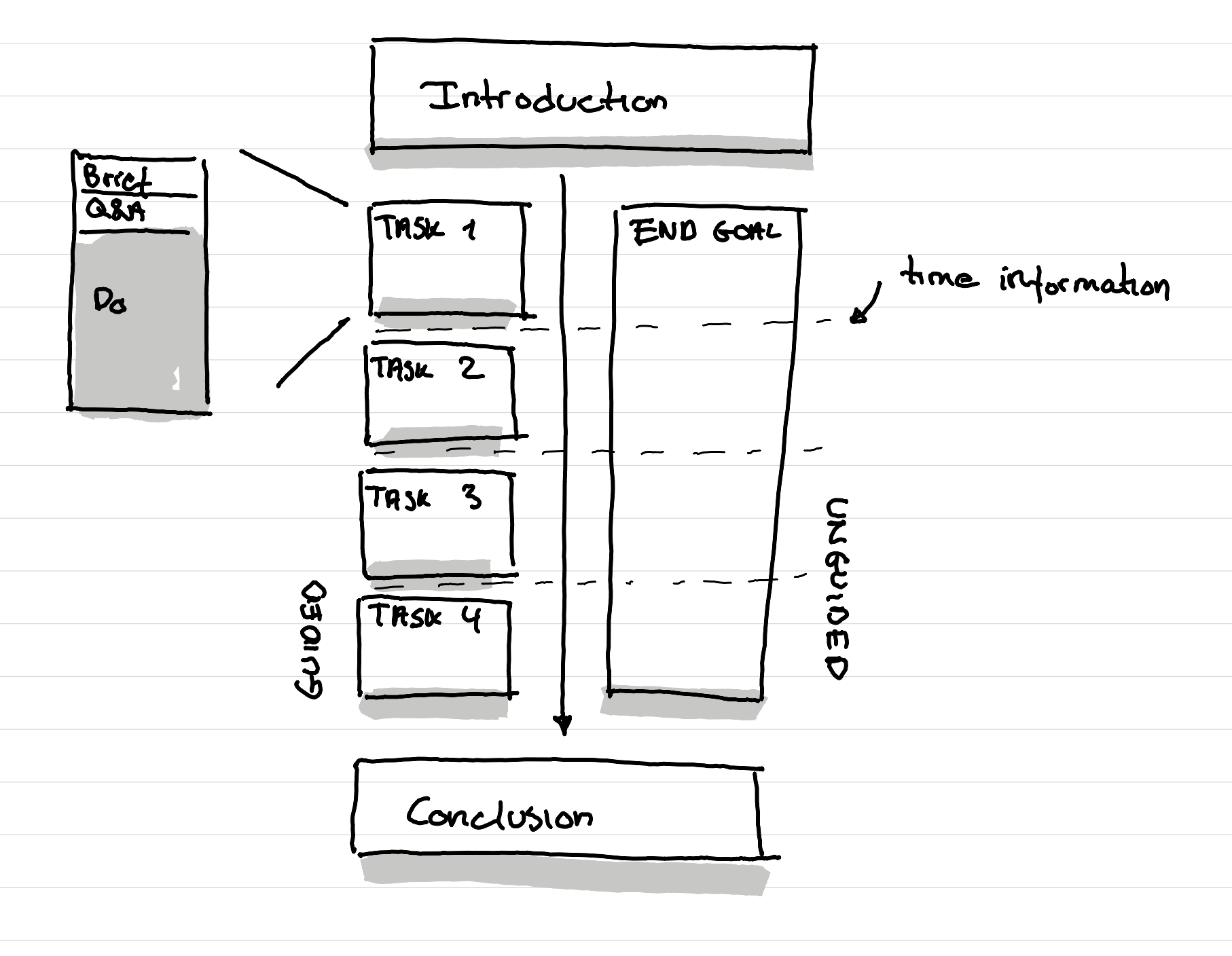
Here it can be interesting to split the class in two groups:
- Self guided group: this group gets the end result goal, and figures out the way to work based on what they read
- Step by step group: this group gets a step by step workshop mode with one task after one another, time for clarifying questions before starting, and clear guidance on how much time should be used for this step.
The role of the teacher for group 1
Then as the facilitator or teacher, while the second group is working, I can go checkin personally with the people who are working in a self guided way to see if they have questions.
Room setting
It can be smart to keep everyone in the same room. So that the people from the self guided group, still benefit from hearing when the step by step group has moved to a new step in the process. That can serve as in a marathon, as the person who runs next to you, and you see if you are in front or behind.
A few advantages
By splitting the group in two it has a few advantages:
- Those who get things fast and want to produce more, go deeper have the opportunity to do so
- Those who need a bit more guidance, or are coming from a background that lacks a few basics can still feel comfortable
- If a learner feels in a low energy day because of things that happen outside of the learning environnement they can enjoy a day of deep work with a positive time pressure that canalizes their thoughts. And if the same learner feels very empowered and excited he can just go solo.
This article was written on a refurbished Remarkable II tablet with a type folio cover. The illustration was made drawn by hand on the same tablet.If you are curious you can download the original note below.
Related articles
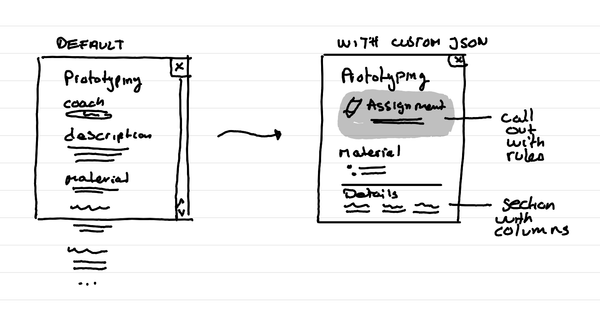
How to format Microsoft Lists for a course schedule so that it doesn't suck?
In short: with custom JSON code, that you can ask an LLM to help you write, you can adapt how the details of a session in your course look like.
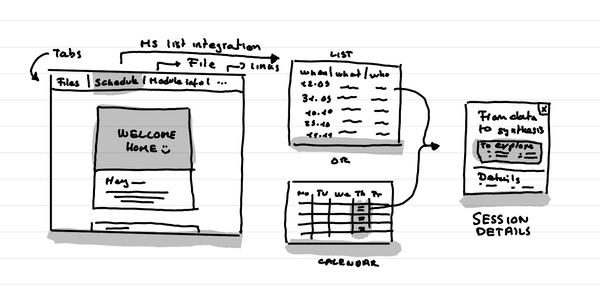
How to create a small course hub in a teams channel
In short: Use tabs to link to key documents, and resources. Use Microsoft List as an integration to put the schedule that shows as a list or a calendar.
Why do I love big organization HQ tours in Service Design education?
In short: access many nerds in one go who are in the thick of it with different professional postures. And it can lead to projects for learners.